
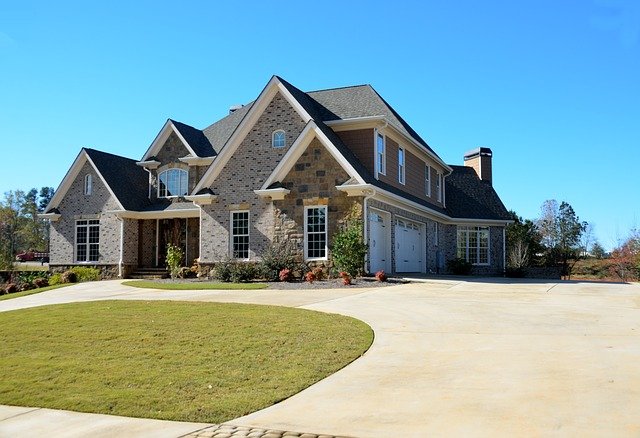
Can You Buy a House and Get a Green Card in the US?
A common question among foreign investors and international clients is whether buying a residential home or property in Florida or elsewhere in the United States leads to permanent residency (a green card).
The short answer is no. The US government does not grant green cards simply for purchasing residential real estate (house, condo apartment, etc.).
However, real estate acquisitions can form part of a broader US immigration strategy through active commercial enterprise investments for the purpose of obtaining green card thorugh investment.
Why Buying Residential Real Estate Does Not Qualify You for a Green Card
A widespread misconception suggests that buying a home in the United States automatically grants residency. US immigration law does not recognize passive real estate purchases—such as single-family homes, vacation condos, or short-term rental properties like Airbnb—as qualifying investments for a green card.
Benefits and Risks of US Real Estate Ownership
While residential homeownership alone will not grant legal status, US real estate remains an attractive financial asset:
- Key Benefits: Steady property appreciation, potential rental yields, well-protected private property rights, and a hedge against domestic inflation or political instability in investor’s home country.
- Investment Risks: Overconfidence leading to skipped inspections, unfamiliarity with local US property markets, and underestimating ongoing property management and maintenance expenses which are usually a lot lower in developing countries.
How to Get a Green Card Through Real Estate: The EB-5 Investor Visa
To obtain permanent residency through an investment, foreign nationals must utilize established immigration pathways like the EB-5 Immigrant Investor Program. The program allows for a direct investment in a new business that is managed by the investor, or a passive investment made through an EB-5 Regional Center.
EB-5 Investment Pathways:
- Direct Commercial Investment:
- Active enterprise (e.g., car wash)
- Min. $800k (TEA) or $1.05M
- Must create 10 full-time jobs
- Regional Center Project:
- Passive pooled investment
- Min. $800k (TEA) or $1.05M
- Must create 10 full-time jobs
EB-5 Visa Requirements
- Minimum Capital: $800,000 in a Targeted Employment Area (TEA—rural or high-unemployment area) or $1,050,000 in non-TEA markets.
- Job Creation: The capital must directly or indirectly create at least 10 full-time jobs for qualified US workers.
- Active Enterprise: The investment must go into a commercial, job-generating business rather than a passive residential asset.
Qualifying Real Estate Investments Under the EB-5 Program
While a primary residence does not qualify, foreign investors can integrate commercial property purchases or regional center real estate funds into their EB-5 strategy.
1. Direct Investment in Commercial Real Estate
You can acquire commercial property as part of an active, job-creating business. For example, purchasing the physical land and building for an active enterprise—such as a car wash, hotel, or care facility —counts toward the required EB-5 capital threshold.
Important: If you use a mortgage to purchase commercial real estate, only the equity you contribute counts toward the qualifying EB-5 investment amount. The unpaid mortgage loan balance does not count.
If you have previously invested in a U.S. business for E-2 visa or L-1 visa, you may be eligible to apply for EB-5 Visa with the same investment. To learn more, contact our E-2 visa lawyer.
2. Real Estate Investments Through EB-5 Regional Centers
Investors seeking a more passive approach can pool funds into a USCIS-designated EB-5 Regional Center. Regional centers fund major commercial and residential development projects that satisfy USCIS job-creation targets. This way, you can invest in real estate projects through a regional center and get a green card.
A regional center is an economic unit, which can be either public or private, that is involved with promoting economic growth in the United States. Each regional center has to be designated by the USCIS and has well-defined geographic area.
Regional centers do not invest directly into projects. Instead, a regional center sets up an investment fund for the benefit of the EB-5 investors, and then loans the funds to a US project. The project then uses the funds loaned to build or develop the US project and create jobs for US workers.
- Priority Processing for Rural Projects: Rural regional center investments receive priority USCIS adjudication, significantly speeding up green card approval timelines. The processing time for investments in EB-5 Regional Center for rural project is 3 to 6 months.
- Mitigated Risk: Regional centers manage project operations, developer compliance, and job creation reporting directly.
Frequently Asked Questions
In 2011, US lawmakers proposed a 3-year visa for foreign citizens who purchased US homes. The proposal was made by US senators Mike Lee, a Utah Republican, and Charles Schumer, a New York Democrat, in 2011. At the time the US housing market was still recovering from the 2008 economic crisis, demand was weak, and home prices were still falling. The idea was that foreign buyers can help bail out the US real estate market and also boosts tax revenue by becoming US residents for tax purposes. That proposal never became law and has not been revived due to current housing market dynamics and affordability concerns.
Buying a home allows you to stay in the US only for the duration authorized by a separate, valid visa (such as a B1/B2 tourist visa, E-2 investor visa, L-1 visa, E-1 visa, E-3 visa, O-1 visa, TN visa etc). Owning property does not extend your authorized stay.
Why Partner with Malescu Law?
Our EB-5 visa lawyers in Miami, Florida USA have extensive background in immigration and business corporate law. We also provide unparalleled financial expertise for worry-free US green card through investment immigration. Our firm also help E-2, L-1, and other visa holders preserve their eligibility for EB-5 green cards. To learn more about EB-5 for Canadians, visit EB-5 visa for Canadians. For E-2 and L-1 visa for Canadian citizens, visit E-2 visa for Canadians and L-1 visa for Canadians
Our team includes a Chartered Financial Analyst (CFA) specializing in M&A, business valuation and investment. This expert financial analysis minimizes investment risk and streamlines your US visa application.
Before buying real estate to secure a green card, consult our EB-5 visa lawyers to avoid costly mistakes.
Contact our immigration lawyers today to schedule a consultation and review your options.
We serve companies and individuals across all 50 states, the District of Columbia and Puerto Rico.
Contact us or schedule a consultation.
Malescu Law P.A. – Business & Immigration Lawyers