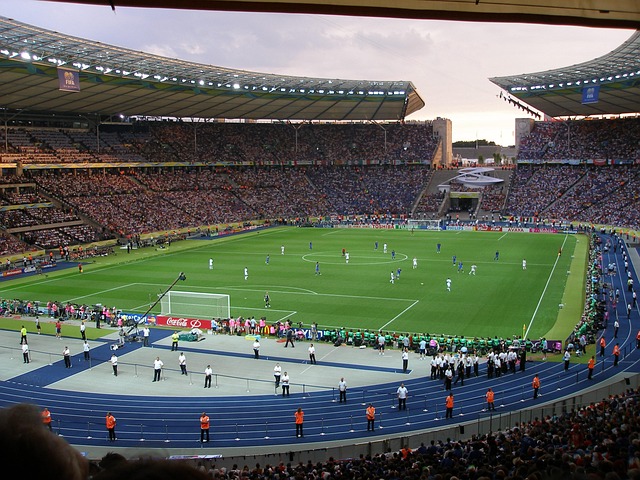
On December 1, 2025, the Department of State (DOS) updated the Foreign Affairs Manual to provide a clear legal framework for B-1 visa issuance to FIFA-accredited volunteers and officials for the FIFA World Cup 2026.
This update is part of a broader strategy to manage the massive influx of travelers expected for the event, including increased consular staffing and specialized appointment slots for ticket holders.
B-1 Visa Guidelines for International Sporting Events
The updated Foreign Affairs Manual (FAM) now explicitly clarifies two categories of participants eligible for B-1 classification:
1. Referees, Judges, and Technical Officials
B-1 visas may be issued to officials hired through a formal selection process to to referee, judge, oversee, or officiate international sporting events such as FIFA World Cup or the Olympics.
Scope: Includes timekeepers, weigh-in officials, starters, and lane inspectors, stroke and turn officials, and others responsible for applying the rules or regulations of individual sports.
Compensation: Applicants cannot receive a salary from a U.S. source, though payment for incidental expenses is permitted.
2. Accredited FIFA World Cup 2026 Volunteers
Individuals selected and accredited by FIFA to volunteer in the U.S. during the during the FIFA World Cup 2026 may qualify for B-1 status, provided they meet specific financial criteria.
Important Compensation Restriction: Volunteers are prohibited from receiving any salary or payment for their services from FIFA or any other source. FIFA does not cover travel or lodging; volunteers must prove they can self-fund their stay, though meals are provided during active shifts.
Key Takeaways for Applicants
Financial Self-Sufficiency: Volunteers must be prepared to pay for their own airfare, housing, and personal expenses. Consular officers will likely request proof of funds during the interview.
Consular Capacity Increasing Ahead of World Cup: : This specific FAM update applies only to accredited volunteers and officials. It does not grant any special visa privileges to general spectators or fans. However, the U.S. Department of State (DOS) is expanding consular capacity to manage anticipated World Cup visa demand.
Section 214(b) Scrutiny: Despite the new guidelines, applicants whether voluteering for or attending the World Cup must still prove “strong ties” to their countries. Please note FIFA World Cup 2026 participation alone does not guarantee visa approval.
Apply Early: The DOS is expanding consular capacity. Applicants are encouraged to apply early for visas. Prospective volunteers should begin the application process as soon as they receive FIFA accreditation. To learn more, visit DOS FIFA World Cup 26 website.
The FIFA Volunteer B-1 Interview Checklist
Mandatory Government Documents
DS-160 Confirmation Page: The printed page with the barcode.
Valid Passport
Appointment Confirmation
Visa Fee Receipt: Proof that the $185 application fee has been paid.
2. FIFA-Specific Credentials
Official FIFA Accreditation/Offer Letter: The formal document from FIFA confirming you have been selected as a volunteer.
Volunteer Role Description: A printout showing your specific duties and the fact that the position is unpaid.
Shift Schedule: Any documentation showing the dates and locations (cities/stadiums) where you are expected to serve.
3. Financial Self-Sufficiency
Since FIFA does not cover travel or lodging, you must prove you can afford the trip.
Recent Bank Statements: Showing enough funds to cover flights, housing, and daily costs.
Proof of Income: Recent pay stubs or an employment letter stating your salary.
Sponsorship Documents: If a family member is paying for your trip, provide their finanacial documents.
4. Proof of Strong Ties
Employment Verification: A letter from your employer stating your position, how long you’ve worked there, and that your leave of absence is approved for the World Cup.
Education Enrollment: If you are a student, bring a transcript or a letter from your university confirming you are enrolled for the following semester.
Property/Assets: Deeds, titles, or lease agreements for property you own or rent in your home country.
Family Ties: Marriage certificates or birth certificates for spouse and children staying behind.
5. Travel Logistics
Flight Itinerary: Round-trip flight reservations.
Accommodation Plan: Hotel or Airbnb confirmations. If staying with a friend, bring their address and contact info.
Travel Insurance: Proof of medical insurance that covers you in the U.S.
Why Partner with Malescu Law for Your World Cup Journey?
The U.S. visa process is more rigorous than ever. Whether you are a refferee, judge, technical official or an accredited FIFA volunteer applying for a B-1 visa or a dedicated fan seeking a B-2 tourist visa, even a minor application error can result in a costly denial.
Here is why clients trust our firm to secure their entry:
Legal Expertise: We don’t just fill out forms. We understand the nuances of the latest 9 FAM 402.2-5(C)(10) updates and ensure your application specifically aligns with the Department of State’s new World Cup protocols.
Strategy for 214(b) Refusals: The most common reason for denial is “lack of ties to the home country.” We help you build a robust case to proactively overcome the presumption of immigrant intent.
Navigating Consular Backlogs: With long wait times, we guide you through the FIFA Priority Appointment Scheduling System and assist in securing emergency or prioritized slots for ticket holders.
Comprehensive Interview Coaching: A five-minute interview determines your travel future. We provide mock interviews and specific talking points for both volunteers and spectators to ensure you present your case with confidence and clarity.
Protection Against Costly Mistakes: FIFA explicitly states they cannot assist with visas. A single mistake on your DS-160 or a lack of financial documentation can result in a denial. We ensure your application is ready from day one.
We serve companies and individuals across all 50 states, the District of Columbia and Puerto Rico.
Anda Malescu is a US immigration lawyer and Florida Bar Board Certified Expert in International Law. A member of the elite category of Florida Bar lawyers recognized for her exceptional knowledge, skill and professionalism, she advises US and international clients, including investors and entrepreneurs, on business immigration and corporate law matters. She holds a JD degree from University of Miami School of Law and a Master's degree in Economics and Business from Erasmus University Rotterdam in the Netherlands. She is a member of the Florida Bar.